
If you’ve poked around the affiliate marketing world, you’ve probably come across ClickBank at least once. ClickBank has been running since 1998, and by now it’s become a pretty familiar name, especially if you’re looking for digital products to promote. I’ve spent a good amount of time as a ClickBank affiliate, fiddled with its dashboard, picked products, dealt with support, and tracked earnings. What you’ll find here comes straight from my own experience finding your way through their platform, along with what’s changed heading into 2026. If you’re curious about whether ClickBank is legit and worth your energy, I’ll break down everything you should know before you get into it.
Here’s a quick summary for those in a rush, before I get into the nitty-gritty details:
- Affiliate Network: ClickBank
- Product Types: Digital, Software, Select Physical Goods
- Payout Methods: Direct Deposit, Wire, Check, Payoneer
- Minimum Payout: $10
- Top Geography: Global, but best for US, Canada, UK, Australia
- Support: Tech support, Ticket, Chat (during business hours)
- My Overall Rating: 4.2
- TrustPilot Rating: 4.3 (as of May 2026)
- Free to Join: Yes. You can sign up and start exploring offers instantly. No upfront costs or approval process for most markets.
Is the ClickBank Affiliate Program Legit?
This is one of the first things I asked when I signed up years ago, and I can tell you: ClickBank is 100% legit. The company’s been around for nearly three decades and regularly pays affiliates on time. I’ve had dozens of deposits hit my account without any issues. You’ll find mixed reviews about ClickBank floating around, mostly because product quality varies and there’s the occasional spammy offer. But as a platform, it’s secure, their payment systems are reliable, and you don’t have to worry about getting scammed by ClickBank directly. It holds an A+ BBB rating and has consistently resolved user complaints.
What makes ClickBank different from standard affiliate networks is that it isn’t a retailer. It’s a marketplace linking vendors (the people who create products) with affiliates. That means your experience depends a lot on which product owners you work with. Still, ClickBank handles all the payments, deliveries, refunds, and support related to affiliate commissions, so you’re protected from shady vendors pocketing your commissions.
Who Runs ClickBank?
ClickBank was founded by Tim and Eileen Barber in 1998. Currently, the company is led by CEO, Kelly Householder a professional management team headquartered in Boise, Idaho, with offices in Europe and Asia Pacific. ClickBank isn’t run by anonymous owners or hidden behind a shell company. You can look up the executive team and find plenty of interviews and press coverage. I’ve found their support to be responsive, at least during business hours.
They’ve grown the company to serve over 100,000 active affiliates and thousands of vendors, moving hundreds of millions in product revenue every year. If you ever need to reach out, there’s a public help desk, and I’ve received personal email follow ups on more complicated issues. Not every program offers that level of support.
ClickBank also maintains transparency by regularly publishing updates, running webinars with their executive staff, and supporting vendors and affiliates through seasonal programs. Their team’s focus on providing secure and fair transactions has helped cement a solid reputation in the affiliate marketing community.
What Products Can You Promote?
ClickBank is best known for digital goods: online courses, fitness ebooks, coaching programs, SaaS (Software as a Service tools), diet guides, and software utilities, just to name a few. Over the past few years, they’ve added a handful of highticket physical items like supplements, gadgets, and even home goods, but the bulk is still info-products. I mostly stick to the top digital categories, which are listed below, where the demand and commissions are highest:
- Health & Fitness (weight loss, keto, supplements, yoga, home workouts)
- Make Money Online (trading, investing, crypto guides, affiliate marketing courses)
- Self-Help & Personal Development (habits, manifestation, relationship advice)
- Software & Tools (AI writing programs, design software, video editors)
- Parenting & Education (homeschooling courses, child development guides)
- Hobbies (music, gaming strategies, art and photography)
There are thousands of offers here, and not all of them are gold. Careful browsing and research help weed out the noneffective offers and zero in on the offers that actually help people. I usually check Gravity (ClickBank’s measure of recent sales activity), the commission percentage, and refund rates to find promising products.
To ensure you’re promoting worthwhile products, it’s wise to also check independent reviews of the vendors, ask in affiliate communities, and narrow down your choices to products with verified testimonials and a professional sales page. By doing a little extra homework, you can cut down on refund hassles and build trust with your audience.
How Does ClickBank Work for Affiliates?
Signing up as an affiliate is pretty simple. There are no long approvals, credit checks, or tax documents at signup unless you hit certain payment thresholds. Once you’re in, you get access to the ClickBank Marketplace, which sorts thousands of offers by category, with tools to filter by commission rate, average sale, Gravity, and visitor value.
Here’s how the process works after you join:
- Pick a product from the Marketplace. Each listing shows commission, affiliate resources (email swipes, banners), and pay frequency.
- Generate your HopLink. This is your unique tracking link. You can add tracking IDs for campaigns.
- Promote the link wherever you want: blog, YouTube, email (if allowed), paid ads, or social.
- Earn a commission when someone clicks through and buys (70% of ClickBank’s offers are digital, so delivery happens instantly and you get paid faster).
- Receive payments by direct deposit, check, wire, or Payoneer, once you meet the minimum threshold ($10 by default).
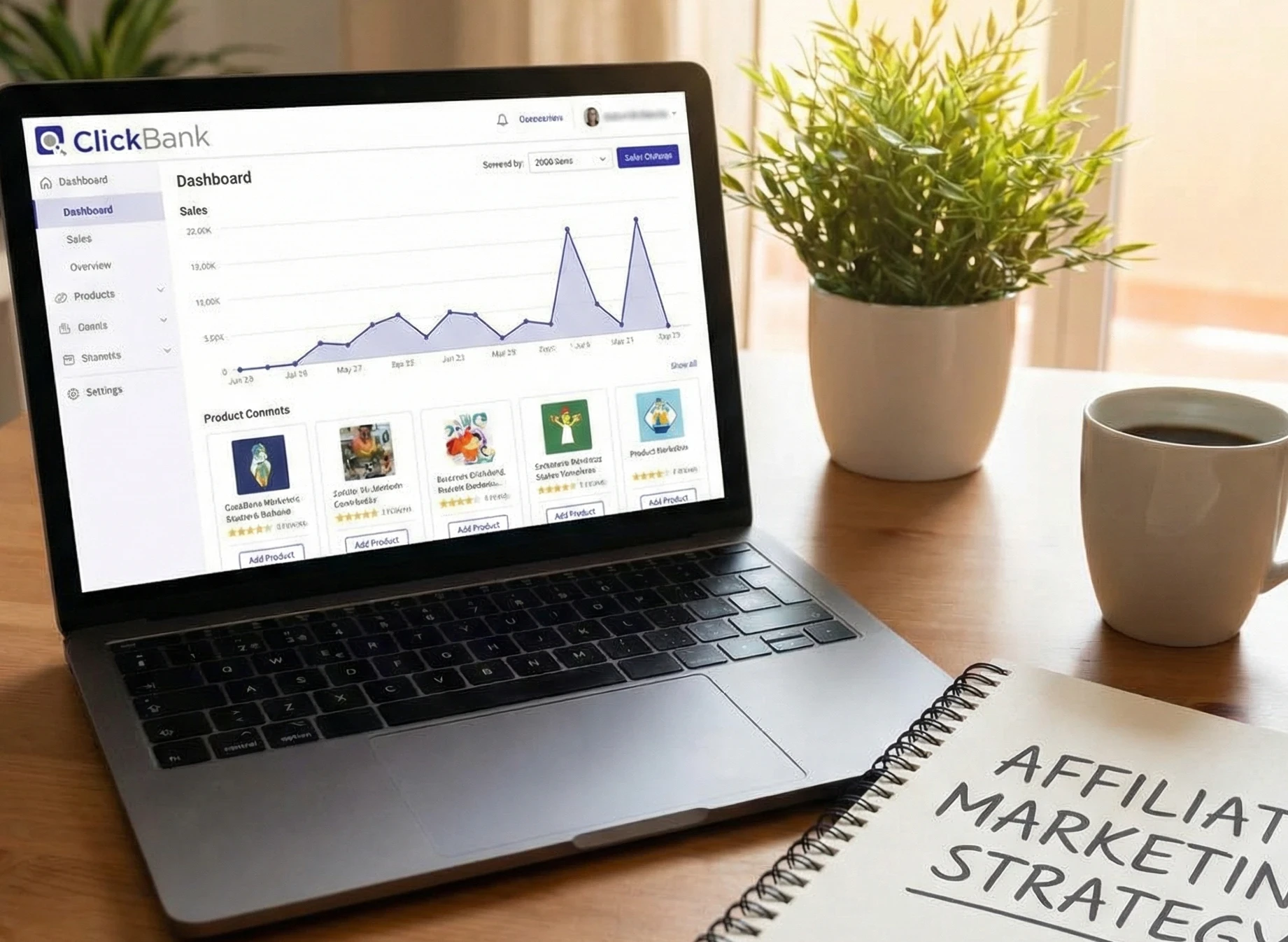
Each sale, and refund, shows up on your dashboard same day. I’ve always found the analytics straightforward. They break down gross sales, refunds, upsells, and your net take home.
ClickBank’s Commission Structure
This is what really draws many people to ClickBank; the commissions can be huge. Unlike Amazon or ShareASale, where you’re lucky to get 5–8%, ClickBank offers commonly pay out 50% to 75% per sale. For highticket recurring subscriptions or one time offers, you can easily see $100+ per referral, especially for new launches or “premium” funnels that include upsells.
Don’t expect every offer to pay that high; some categories stick closer to 20–30%. Always doublecheck commission rules and policy, as some vendors place restrictions or time limits.
How Do You Get Paid?
Getting paid is pretty easy as long as you keep your account in good standing. ClickBank pays out weekly or biweekly as long as you hit the $10 minimum. You’ll choose your payment method from:
- Direct deposit to your bank account (most countries except a few regions)
- Wire transfer for international affiliates (larger fees apply)
- Check in the mail (much slower; honestly not the best choice these days)
- Payoneer (super useful if you want to avoid direct bank info or need debit card access)
You set your payment threshold to whatever amount fits your comfort level. I keep mine at $50.00 minimum.
Note that if you’re outside the US, currency conversion fees or wire charges can reduce your actual earnings a bit. It’s smart to review their payout FAQ before you start earning, and set your preferences early on to match your banking needs.
ClickBank does a decent job flagging suspicious activity, but it’s important to follow their rules about traffic sources and avoid fake leads.
Is It Actually Possible to Make Money on ClickBank?
This is what most people want to know: Can you actually earn a solid income as a ClickBank affiliate? From my experience, yes, but it’s not instant and it comes with plenty of trial and error. I’ve had months where my ClickBank earnings made up a good chunk of my online income, and others where I barely scraped by because of changes in the market or offer performance.
Here’s what I’ve learned:
- Finding good offers is half the battle. Not everything sells, and lots of ClickBank products are quickly put together or hyped up. I always check for a real, up-to-date website, customer reviews outside of ClickBank, and refund rates below 10%.
- Traffic is king. If you already own a blog or YouTube channel in a niche ClickBank serves, you’re halfway there. If you’re buying ads, test and track everything. Some ClickBank offers convert well on email lists, TikTok, and short-form video.
- Persistence pays. Most successful affiliates I know tried at least three to five different offers before hitting one that worked for their audience. I set up AB tests with different headlines, landing pages, and bonuses to see what grabs attention.
- Refund rates eat earnings. Some niches, especially “make money fast” and weight loss, have refund rates over 20%. This can really sting at payout time, as ClickBank automatically deducts refunds from your total.
- Recurring revenue is the real deal. Offers with monthly subscriptions lead to more stable income, sometimes months or even years of payments per customer.
How much you make depends on your effort, traffic sources, and product choice. I’ve seen total beginners hit $50–$500 per month after one to three months, while seasoned marketers can pull in thousands. There’s no cap, but there’s also no guarantee.
ClickBank Affiliate Tools & Resources
The ClickBank dashboard has definitely improved, especially in the past couple of years. Even if you’re brand new, most things are easy to find. These are the platform features I use the most:
- Marketplace Filters: Sort offers by category, gravity, commission rate, or average payout. Saves tons of time searching for something actually worth your time.
- HopLink Generator: All affiliate links go through this generator, and you can add tracking codes for separate campaigns. Handy if you run traffic from more than one place.
- Affiliate Resources (provided by vendors): Most topselling offers include banners, email templates, social posts, video scripts, etc. I always double check these for quality before running ads.
- Reporting & Analytics: Track clicks, gross revenue, refunds, and net payout. I export these reports weekly when I’m running email promotions or PPC campaigns. Refund rates and conversion rates are right up top.
- Tutorials & Training: ClickBank University (CBU) is ClickBank’s optional paid affiliate training. I’ve researched the trial, and some content is useful for complete newbies, but honestly, many free YouTube and blog resources are just as good if you’re on a budget.
- API Access: If you want to automate reports or sale notifications to your own CRM, ClickBank offers developer API access. Super helpful if you want to keep everything tracked in real time.
Pros and Cons of the ClickBank Affiliate Program
ClickBank isn’t perfect. They have some pros and cons you should know about. Some things are super handy, and a few things can be frustrating or even cost you money if you’re not careful. Here’s my breakdown based on daily use:
Biggest Benefits
- High commissions: Much better than most ecomm networks. Digital products are especially rewarding here.
- Quick signup: You don’t need to prove experience to join. It is great for beginners.
- Global reach: Offers and payments available in 170+ countries. You won’t get blocked out if you’re outside the US.
- Support for multiple languages and currencies: Useful for affiliates outside of the US, including vendor product pages.
- Lots of promotional angles: Vendors supply ads, videos, swipes, etc., so it’s easy to get started.
- No cap on payout: Your earnings potential isn’t limited once you’re rolling.
Downsides and Complaints
- Product quality varies: Some ClickBank offers are hyped up and not great for long term trust with your audience.
- High refund rates in some niches: Can be a real pain, especially for weight loss, spirituality, or fast money offers.
- Payout minimums and fees: Wire transfer fees and currency conversion can eat into small affiliate earnings outside the US.
- Marketplace has a learning curve: There’s a lot to sift through, and Gravity isn’t a direct reflection of quality, just sales momentum.
- Lots of competition: In the top niches, you’re rarely the only one promoting an offer. Original content or bonuses help.
How ClickBank Handles Fraud, Refunds & Affiliate Rules
ClickBank is more about keeping an eye out for fraud these days than it used to be. They check for fake leads (especially if you send bot or fake traffic), and have a dedicated team for affiliate and vendor disputes. The most common rules and issues to know:
- Don’t buy through your own affiliate links just to rack up commissions. ClickBank will catch you and close your account.
- Don’t run forbidden traffic to CPA offers (like incentivized clicks or illegal spam).
- Keep refund rates low. If your traffic source is sending bot clicks or low quality leads that refund, your account may get flagged.
- Be honest in your marketing. Vendors can suspend links or block affiliates who use misleading claims or fake testimonials.
If you follow the guidelines and use ClickBank’s support or their compliance guide, you’ll be fine.
How ClickBank Compares to Other Affiliate Programs
I’ve dabbled in dozens of other networks, including CJ Affiliate, ShareASale, Rakuten, JVZoo, Wealthy Affiliate, and Amazon Associates to name a few. Each has its own perks. ClickBank stands out in a few areas for affiliates looking for digital goods and high commissions:
- Faster signup and broad product range. You’ll find more “instant digital download” and subscription offers here than anywhere else.
- Simpler payments: No monthly minimums or complex invoicing.
- Fewer brand-name ecommerce offers: If you want to promote Walmart or Nike, go elsewhere.
- More risk of low quality offers: Not every vendor is high quality, so you’ll want to be picky.
If you are serious about promoting for brands and looking for world class training, hosting, access to coaches, accountability, and personal mentorship, I am a member of a world class platform called Wealthy Affiliate. It is a better overall choice for beginners and those who want to build a real business from scratch, rather than just hop from offer to offer. ClickBank is a pure marketplace; Wealthy Affiliate is a training community with tools, training, and has its own marketplace. Both fit different needs, but if you want the full stack (site building, coaching, SEO tools, and affiliate directories), Wealthy Affiliate definitely covers more bases.
Top Tips For Making Money With ClickBank in 2026
ClickBank hasn’t changed much in the way payouts or interface work, but the way offers convert is always switching up. Here’s what I’d recommend to anyone choosing ClickBank:
- Focus on Evergreen Offers. The best income comes from timeless topics. Think health, relationships, and personal finance.
- Pick products with strong affiliate resources. Vendors that supply solid email copy, landing pages, and video scripts make your work easier and improve conversions.
- Test multiple traffic sources. SEO is solid, but YouTube, TikTok, and Instagram Reels drive fast clicks. Try retargeting campaigns for the most popular offers.
- Check for upsells and recurring commissions. The backend matters a lot. 70% commissions on a $17 ebook vs. 40% recurring on a $97 membership can seriously change your longterm numbers.
- Avoid unproven “shiny object” launches. These spammy launches often skyrocket and then vanish. I stick to offers that have stayed in the Marketplace for over a year and still pull high Gravity.
- Guard your account. Don’t give access to shady VAs or run incentivized clicks. Losing a trusted affiliate account due to a rules violation stings more than losing a week of commissions.
- Create bonus bundles. Add value for your referrals with guides, templates, or free coaching. This helps boost conversions and keeps your audience coming back for more.
Another tip: stay connected with affiliate marketing forums and newsletters. Trends in digital product demand can change rapidly, so be ready to switch things up or try emerging niches. Building your own list also gives you more control over your ClickBank results, since you can test new offers quickly with a warmed-up audience.
A Look At ClickBank University (CBU) in 2026
ClickBank University (CBU) is the official training program operated by ClickBank itself. It’s been online since 2015 and is frequently updated. CBU covers both affiliate and vendor training, so you can learn how to create your own product on ClickBank as well as how to promote someone else’s.
What you’ll find is mostly video modules, downloadable checklists, and some weekly webinars. The affiliate track reviews the traffic (SEO, social, ads), email marketing, offer selections, and basic funnel building. There’s a private community of beginner and mid-level affiliates to ask questions, but most involvement is in the weekly updates and office hours. The vendor side is for people who want to convert their courses or ebooks into affiliate offers.
Here’s the deal. If you’ve never heard of affiliate marketing before, ClickBank University has some solid step-by-step instructions for starting from zero. But if you’ve hung around forums or YouTube or places like Wealthy Affiliate for any amount of time, you’ve probably heard most of it before, and there are definitely cheaper or free ways to get similar training.
FAQs: Honest Answers About ClickBank in 2026
I get a lot of the same questions from people considering ClickBank, so here’s a rundown of honest answers that might help:
- Is ClickBank free to join as an affiliate? Yes, it is still free, no hidden fees for affiliates. Only vendors pay a listing fee.
- Do I need a website to earn payouts? Technically, you can use most traffic sources, but having a website helps you comply with the vendor’s affiliate terms and is better for long-term earnings.
- How long does it take to get paid? About a week after your first sale if you hit the $10 payout threshold.
- Do affiliates get charged if customers refund? Yes, ClickBank deducts the sale commission for any refunded or chargeback sales from your balance.
- Can I promote ClickBank on social media? Yes, most products can be promoted on Facebook, YouTube, TikTok, Pinterest, etc., but avoid spamming and double check each product’s terms.
- Are all offers on ClickBank safe to promote? Almost all, but occasionally ClickBank removes offers that break FTC rules or get high refund or complaint rates. Stick with products with a long track record for safety.
Who Should (and Shouldn’t) Use ClickBank?
ClickBank works well for certain types of affiliates:
- Bloggers in evergreen niches, especially health, make money, or relationships
- YouTubers reviewing info-products, courses, or SaaS tools
- Email marketers with established lists
- PPC marketers comfortable with tracking and compliance
- People who want fast signup and global earning options
It’s less ideal for anyone looking for bluechip retailers (that’s more CJ Affiliate, Impact, or Amazon), or those who want super tight product quality controls. Also, if you’re brand new and want serious hands-on training, a program with daily coaching, technical support, and sitebuilding tools—like Wealthy Affiliate—is an all-in-one starting point.
Pricing: What’s It Cost?
There’s no fee for affiliate signup. Vendors (the people who create and house the products) pay an activation fee ($49.95 as of 2026) and a small deduction per sale. Refunds and ClickBank’s little processing fee, which typically amounts to roughly 7.5% + $1 per sale, are deducted from all affiliate profits. That’s something to keep in mind when you compare ClickBank’s published “payout per sale” numbers—final payouts are always net of these fees and any refunds or chargebacks.
For affiliates targeting high volume sales, it’s helpful to factor in these processing fees when projecting overall profitability, especially if you promote lower priced items. Luckily, for most digital products with high commission rates, this fee does not eat a massive chunk of your earnings.
My Final Thoughts on This ClickBank Affiliate Program
I’ve made money with ClickBank in multiple niches and can vouch for their consistent payments and easy to use dashboard. Scrolling through the Marketplace does feel like a treasure hunt; sometimes you get ineffective offers and sometimes something really pops off. If you’re diligent, do your research, and focus on quality, it’s absolutely possible to build a steady income.
ClickBank isn’t perfect, and it doesn’t replace a business building platform with coaching, tools, and custom training. If you’re looking for a flexible “plug and play” affiliate network that pays reliably and supports high commission offers, ClickBank is your choice.
For those wanting a full step-by-step roadmap, hands-on help, website hosting, and deep community support—especially if you’re just starting out—I find Wealthy Affiliate is the better fit. It wraps together education, coaching, and tools rather than just a marketplace. Learn more about Wealthy Affiliate and its platform.
If you come across any other questions about ClickBank or want personal tips? Please leave them in the comments below. I am always happy to share my real world experiences.
“Here’s a little transparency: Our website contains affiliate links. This means if you click and make a purchase, we may receive a small commission. Don’t worry, there’s no extra cost to you. It’s a simple way you can support our mission to bring you quality content.”